|
COIN DETAILS:
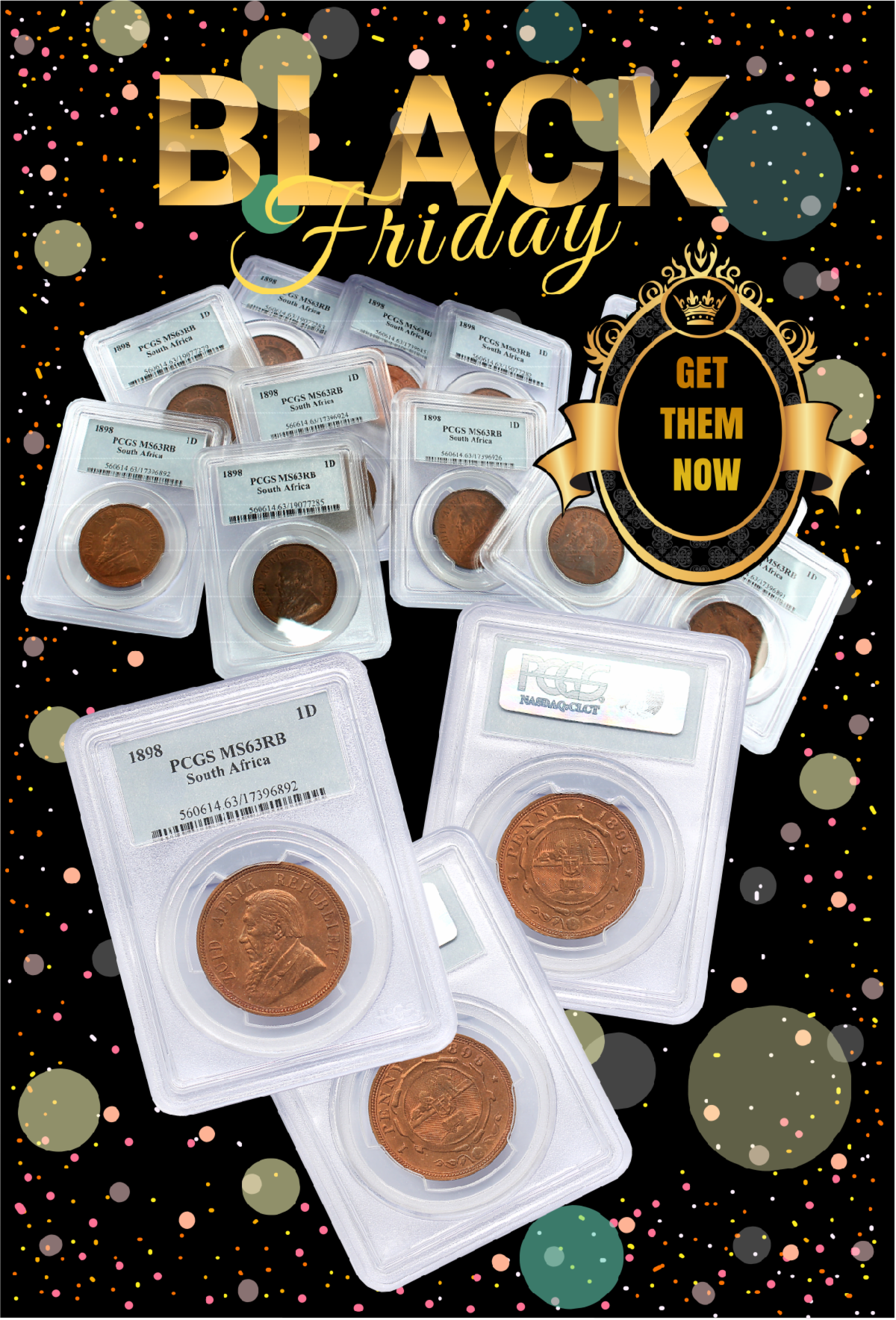
- Country: Zuid-Afrikaansche Republiek (South African Republic)
- Year: 1898
- Denomination: 1 Penny
- Material: Bronze
- Obverse: Bust of President Paul Kruger
- Reverse: The national coat-of-arms of the ZAR
- Diameter: Approximately 30.8mm
- Weight: Approximately 9.45g
The history of the Zuid-Afrikaansche Republiek (ZAR), or Transvaal Republic, under Paul Kruger was dominated by the struggle for independence from British imperialism, the profound changes brought by the discovery of gold, and the inevitable conflict that led to the Second Anglo-Boer War.
Paul Kruger, a farmer and a devout Calvinist, was a key figure in the Boer resistance from a young age, participating in the Great Trek and rising through military ranks.
- First Anglo-Boer War (1880-1881): After the British annexed the ZAR in 1877, Kruger was instrumental in leading the resistance movement. The Boers' victory at the Battle of Majuba Hill in 1881 forced Britain to negotiate, leading to the restoration of the ZAR's independence under British suzerainty (supervision).
- Presidency: Kruger was first elected President of the ZAR in 1883, a position he held for four consecutive terms, becoming a symbol of Afrikaner nationalism.
- London Convention (1884): He led a delegation to London to negotiate a new convention that secured complete independence for the ZAR and removed any reference to British suzerainty.
Gold Discovery and Political Tensions
The discovery of massive gold deposits on the Witwatersrand in 1886 drastically changed the ZAR's political and economic landscape.
- Uitlanders (Foreigners): Thousands of foreigners, mainly British, flocked to the ZAR to work in the goldfields. They soon formed the majority of the population in the burgeoning city of Johannesburg and generated most of the republic's tax revenue, yet Kruger's government denied them civic representation and voting rights, viewing them as a threat to Boer independence.
- Economic Policy: Kruger's administration aimed to protect the ZAR's independence by developing its own infrastructure, such as the railway line to Delagoa Bay, to avoid reliance on British-controlled ports and railways.
- Jameson Raid (1895-1896): Tensions escalated, culminating in an unsuccessful attempt by Dr. Leander Starr Jameson, an associate of Cape Colony Premier Cecil Rhodes, to foment an uprising in Johannesburg and overthrow Kruger's government. The failure of the raid further soured Anglo-Boer relations and strengthened Kruger's resolve against British interference.
The South African (Second Boer) War and Exile
The "Uitlander problem" ultimately led to war. British High Commissioner Alfred Milner demanded that Kruger lower the voting qualification for foreigners, which Kruger resisted.
- Outbreak of War: Believing war was inevitable, Kruger issued an ultimatum to Britain on October 9, 1899, demanding the withdrawal of British troops from the ZAR's borders. The ultimatum expired, and the Second Boer War began on October 11, 1899.
- Exile: As British forces advanced and occupied the ZAR capital, Pretoria, in May 1900, the aging Kruger, at 75 years old, left the country for Europe on a Dutch warship sent by Queen Wilhelmina.
- Death and Burial: He spent the remainder of his life in exile in the Netherlands and Switzerland, attempting to garner support for the Boer cause, until his death in 1904. His body was returned to South Africa and buried in Pretoria.
Kruger's legacy in South Africa is significant; he is remembered as a resilient leader and a symbol of Afrikaner resistance, with the globally traded Krugerrand coin and the expansive Kruger National Park named in his honour.
|